
Choosing between Invisalign and braces as an adult in Jackson, MI can feel overwhelming. A straighter smile sounds great, but you also have questions about how each option fits your lifestyle, budget, and treatment goals. Both treatments deliver real results for adults, so the decision really comes down to your specific dental needs, daily routine, and personal preferences.
Dr. Watterson and our team at Watterson Dentistry help adults in the Jackson, Michigan area make confident decisions about orthodontic treatment every day. Let's break down what you need to know about each option so you can take the next step toward the smile you deserve.
What Are Invisalign and Braces? Understanding Your Adult Orthodontic Options
Invisalign and braces are two FDA-cleared orthodontic treatments designed to straighten adult teeth. Invisalign uses removable clear plastic aligners custom-made for your mouth, while braces use fixed metal or ceramic brackets connected by archwires. Both options are effective for adults, and the best choice depends on your specific alignment needs, lifestyle, and budget.
Invisalign works through a series of custom-made clear plastic aligners that gradually shift your teeth into proper alignment. Each set of aligners is designed specifically for your mouth using digital scanning technology, and you swap them out for a new set every one to two weeks as your teeth move.
Traditional braces work differently. Metal brackets are bonded directly to your teeth, connected by an archwire that applies steady pressure over time. Ceramic braces offer a less noticeable option with tooth-colored brackets, while lingual braces attach to the back of your teeth for an almost invisible look.
Both Invisalign and braces work well for adults. Adult orthodontic treatment has become increasingly common. According to the American Association of Orthodontists, one in four orthodontic families today includes an adult seeking treatment.
You're never too old for a straighter smile. Adult teeth respond well to orthodontic treatment, and the results can last a lifetime with proper retention.
How Each Treatment Works: Process and Timeline for Adults
How Does the Invisalign Process Work for Adults?
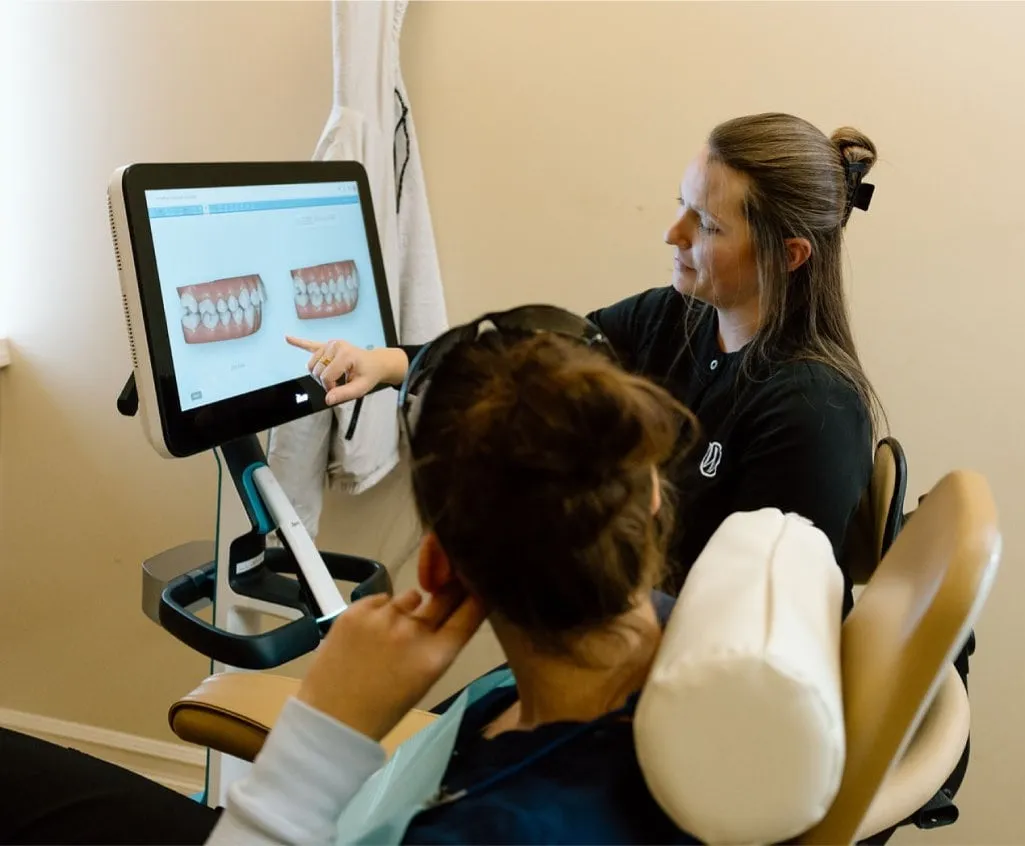
Your Invisalign treatment begins with a digital scan at Watterson Dentistry using our iTero scanner. No messy impressions required. This scan creates a precise 3D model of your teeth, which Dr. Watterson uses to map out your entire treatment plan from start to finish.
Each set of custom aligners stays in for one to two weeks before you move to the next. Most adult Invisalign cases take between 6 and 18 months, depending on complexity.
Here's what makes compliance critical: you need to wear your aligners 20 to 22 hours per day. They only come out for eating, drinking anything besides water, and brushing your teeth. Skip wearing them consistently, and your treatment timeline stretches out.
Some cases require small tooth-colored attachments bonded to certain teeth. These attachments give the aligners extra grip for more complex tooth movements like rotations or vertical shifts.
How Does the Braces Process Work for Adults?
With traditional braces, Dr. Watterson bonds brackets to your teeth and connects them with an archwire. You'll come in every four to eight weeks for adjustments, where the wire is tightened or replaced to continue moving your teeth.
Adult braces treatment typically takes 12 to 36 months. More complex cases involving significant bite correction tend toward the longer end of that range.
The advantage? Once braces are on, they work around the clock. There's nothing to remember, nothing to take out, nothing to lose.
Benefits of Invisalign and Braces for Adult Patients
Why Do Adults Choose Invisalign?
- Nearly invisible appearance, so most people won't notice you're wearing aligners during conversations or meetings
- Remove them for eating, which means no food restrictions whatsoever
- Easier oral hygiene: brush and floss normally without working around brackets and wires
- Check-ins are typically less frequent than braces adjustments, which means fewer trips to the practice
- Smooth plastic sits comfortably against your cheeks and lips, with no bracket irritation
Why Do Adults Choose Braces?
- Complex bite issues and significant crowding often respond better to braces than to aligners
- No compliance worries. They work whether you think about them or not.
- Traditional metal braces typically cost less than Invisalign, making them a budget-friendly option
- Dr. Watterson can make detailed, precise adjustments at each dental appointment
- Decades of research and clinical data support their effectiveness for a wide range of cases
What Health Benefits Do Both Options Share?
Straighter teeth aren't just about appearance. Properly aligned teeth are easier to clean, which reduces your risk of cavities and gum disease. When your bite fits together correctly, you put less stress on your jaw joints and muscles. Many adults report improvement in TMJ symptoms after orthodontic treatment.
Our team sees this firsthand with adults who complete treatment. The difference in oral health is often significant, from healthier gums to reduced wear on tooth surfaces.
Adults who've put off treatment for years often tell us they wish they'd started sooner. The investment in your smile pays off in both confidence and oral health.
Invisalign vs. Braces: A Side-by-Side Comparison for Adults in Jackson, MI
| Factor | Invisalign | Traditional Braces |
|---|---|---|
| Visibility | Nearly invisible clear plastic | Visible brackets and wires (ceramic options less noticeable) |
| Removability | Yes. Remove for meals and brushing | No. Fixed for entire treatment |
| Comfort | Smooth plastic, minimal irritation | May cause cheek and lip irritation initially |
| Diet Restrictions | None, remove aligners to eat | Avoid hard, sticky, and crunchy foods |
| Oral Hygiene | Normal brushing and flossing | Requires special tools and extra time |
| Office Visits | Every 6-10 weeks typically | Every 4-8 weeks for adjustments |
| Treatment Length | 6-18 months for most adults | 12-36 months for most adults |
| Best For | Mild to moderate crowding, gaps, and bite issues | Complex cases, severe malocclusion |
| Compliance Required | High, must wear 20-22 hours daily | Low, works automatically |
Which Handles Complex Cases Better?
Braces maintain an edge for severe orthodontic problems. Significant overbites, underbites, crossbites, and major crowding often respond more predictably to traditional braces. The fixed brackets give your orthodontist precise control over tooth movement in all directions.
Invisalign has improved dramatically and now treats many cases that once required braces. Mild to moderate crowding, spacing issues, and certain bite problems respond well to Invisalign. The key is proper case selection during your initial consultation.
What Lifestyle Factors Should You Consider?
Think honestly about your daily routine. Do you travel frequently for work? Invisalign lets you manage treatment without regular in-practice visits. Do you tend to lose small items? Braces eliminate the risk of misplacing aligners. Love corn on the cob and caramel apples? Invisalign lets you eat anything you want.
Your lifestyle matters. The best treatment is one you'll actually complete successfully. Talking through your daily habits with your orthodontist during a consultation helps narrow down the right fit.
How Much Do Invisalign and Braces Cost for Adults in Jackson, MI?
Invisalign for adults typically costs $3,000 to $8,000, while traditional braces range from $3,000 to $7,000. Your actual cost depends on case complexity, treatment duration, insurance coverage, and the type of braces chosen. Costs in the Jackson, MI area may vary slightly from national averages, so a personalized estimate is always the most accurate way to plan.
What Affects Your Cost?
Several factors determine what you'll pay. Case complexity plays the biggest role, since more severe alignment problems require longer treatment. Longer treatment also means more aligners or more adjustment dental appointments. Ceramic and lingual braces cost more than traditional metal, so the type of braces you choose matters too. Many dental plans now include adult orthodontic benefits, and geographic location can also influence pricing.
How Can You Make Treatment Affordable?
Many dental insurance plans cover a portion of adult orthodontic treatment. Check with your provider about your specific benefits. Our team at Watterson Dentistry in Jackson, MI helps you understand your coverage and maximize your benefits.
We also offer financing and payment options because cost shouldn't prevent you from getting the smile you want. Monthly payment plans make treatment accessible for most budgets.
The only way to know your actual cost is through a consultation. Your orthodontist examines your teeth, discusses your goals, and provides a personalized treatment plan with clear pricing. No surprises.
Are You a Candidate? Who Should Choose Invisalign or Braces
Who Is a Good Candidate for Invisalign?
You might be an excellent Invisalign candidate if you have mild to moderate crowding, gaps between teeth, or an overbite/underbite in the mild to moderate range. Teeth that have shifted after previous orthodontic treatment (more common than you'd think) also respond well. Invisalign works best for adults who are organized and disciplined, since you need to remember your aligners, keep track of them, and wear them consistently every single day.
Who Is a Good Candidate for Braces?
Braces might be your better option if you have severe crowding, significant bite problems needing multi-directional correction, or rotated teeth requiring complex movement. They're also worth considering if you have concerns about compliance with removable aligners, or if budget is a factor, since metal braces are often less expensive.
What Should You Do Before Starting Treatment?
Some adults need preliminary dental care before orthodontics. Active gum disease must be treated first. Missing teeth might require implants or bridges as part of your overall treatment plan. Cavities need filling before brackets go on or aligners are made.
Dr. Watterson evaluates your complete oral health during your initial appointment. If you need any prep work, we discuss that upfront so you know exactly what to expect. This honest, upfront approach reflects a unique philosophy of care that guides everything we do at Watterson Dentistry.
How Do You Know Which Option Is Right for You?
Most adults are candidates for orthodontic treatment. The question isn't whether you can straighten your teeth, but which method will work best for your specific situation. A professional evaluation gives you the answer, and that's exactly what your free ortho consult is designed to do.
Dr. Watterson evaluates adult orthodontic cases and recommends the treatment that delivers the best results. Whether that's Invisalign, braces, or a combination approach, you'll leave your consultation with a clear plan and realistic expectations.
Frequently Asked Questions About Invisalign and Braces for Adults
Can Invisalign fix an overbite or underbite in adults?
Yes, Invisalign can correct mild to moderate overbites and underbites in adults. More severe bite issues may require traditional braces or a combination approach. Your orthodontist assesses your specific bite during your consultation and recommends the most effective treatment option for your situation.
How long does adult orthodontic treatment take?
Adult treatment timelines vary based on your starting point and goals. Invisalign typically takes 6 to 18 months for most adults. Braces usually require 12 to 36 months. Your personalized treatment plan includes an estimated timeline based on your specific case, and your orthodontist reviews this with you in detail so there are no surprises along the way.
Is Invisalign as effective as braces for crowded teeth?
For mild to moderate crowding, Invisalign is highly effective and produces excellent results. Severe crowding may respond better to braces, which provide more precise control over complex tooth movements. The right choice depends on how much crowding you have, and that's something your orthodontist can determine during a thorough evaluation.
Do braces or Invisalign hurt more?
Both treatments cause some discomfort, especially when you first start or after adjustments. Most adults find Invisalign slightly more comfortable overall because there are no brackets or wires to irritate your cheeks. The discomfort from either treatment is manageable and temporary. Over-the-counter pain relief and orthodontic wax (for braces) help during the adjustment period.
Can I switch from braces to Invisalign mid-treatment?
In some cases, yes. Adults occasionally transition from braces to Invisalign for the finishing phase of treatment. This isn't common, but it's possible depending on your progress and remaining treatment needs. Discuss this option with your orthodontist if you're interested, as some practices have experience with combination approaches when they make clinical sense.
Ready to Find Out Which Option Is Right for You?
Whether you're leaning toward Invisalign or braces, the best next step is a professional evaluation. An orthodontist can assess your teeth, bite, and alignment, then walk you through your options with honest recommendations. If you're in the Jackson, MI area, Watterson Dentistry offers a free ortho consult where Dr. Watterson reviews your case and helps you choose the right path forward. Give us a call or book online to get started.