
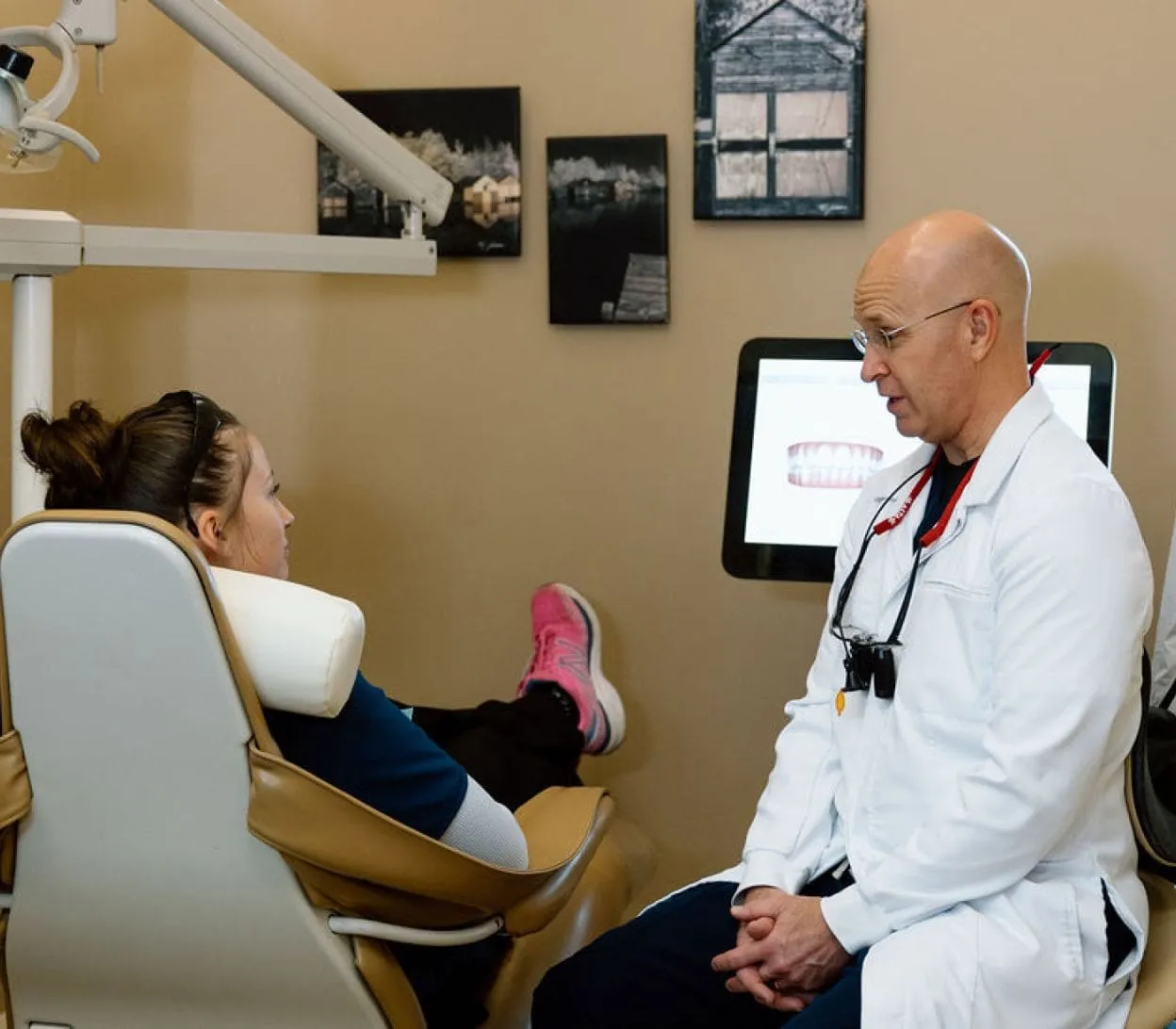
Sedation dentistry in Jackson, MI lets anxious patients get the care they need while feeling deeply relaxed, using either IV conscious sedation or oral conscious sedation, so many people have little to no memory of the treatment afterward.
At Watterson Dentistry, Dr. Scott Watterson began offering sedation nearly 20 years ago because he saw how often fear, past dental trauma or a strong gag reflex kept good people from the care they wanted. If you have been putting off a cleaning, a crown or a bigger project because the thought of the dental chair makes your stomach turn, this guide walks through how sedation dentistry works, who it tends to help and what a sedation appointment looks like from start to finish.
What Is Sedation Dentistry, and How Is It Different From Being Asleep?
Conscious sedation keeps you responsive
Conscious sedation is designed to calm the nervous system rather than put you fully under. You stay able to breathe on your own and respond to simple instructions from our team, yet you feel detached from the sounds, smells and passing time that usually feed dental anxiety. Many patients describe the experience as drifting into a light, pleasant nap while their dentistry is completed.
Why that matters for your care
Because you remain responsive, sedation can be paired with routine and complex procedures alike, from a thorough cleaning to several restorations in one visit. It is a different approach from general anesthesia, which is typically used in hospital or surgical settings, and it allows Dr. Watterson to work comfortably while you stay relaxed.
Who Is a Good Candidate for Sedation Dentistry?
Common reasons patients ask about sedation
People ask about sedation for many reasons, and dental fear is only one of them. Patients often mention a bad experience years ago, a gag reflex that makes impressions or X-rays difficult, trouble getting numb with local anesthesia alone, or simply a busy life that makes one longer visit more appealing than several short ones.
Questions we review first
Before recommending any form of sedation, we review your medical history, current medications and concerns with you. That conversation helps us decide whether sedation is a good fit and which type makes the most sense for your situation, and it gives you a chance to ask every question on your mind before the appointment is scheduled.
How Does IV Conscious Sedation Work?
Medication delivered directly into the bloodstream
With IV sedation, a sedative medication is delivered through a small IV line, so the effects begin almost immediately. That quick onset allows the level of relaxation to be managed closely throughout the appointment, which is one reason IV sedation is often chosen for severe anxiety, significant phobia or longer, more involved procedures.
Careful monitoring the whole time
Throughout an IV sedation appointment, our trained team monitors your heart rate and rhythm, breathing rate and blood oxygen levels. That steady monitoring is part of what lets patients relax completely, knowing someone is watching their wellbeing from the first minute to the last.
How Does Oral Conscious Sedation Work?
A prescribed pill taken before your visit
Oral conscious sedation uses a prescribed medication that you take at a set time, usually about an hour before your appointment. By the time you arrive, the medication has begun calming your nervous system, and you feel relaxed both physically and mentally while remaining awake and aware.
Often a fit for mild to moderate anxiety
Oral sedation is frequently a good match for patients with mild to moderate anxiety, those who feel nervous about specific procedures such as fillings or extractions, and people who want a calmer experience for routine visits. Many patients find it a more effective alternative to laughing gas, and it is especially useful for shorter appointments.
IV vs. Oral Sedation: Which One Fits You?
The right choice depends on your anxiety level, health history and the treatment planned. This side-by-side overview can help you think through the conversation you will have with our team.
| Factor | IV Conscious Sedation | Oral Conscious Sedation |
|---|---|---|
| How it is given | Through a small IV line during the visit | A prescribed pill taken about an hour before |
| How fast it works | Effects begin almost immediately | Takes effect before you arrive |
| Often chosen for | Severe anxiety, phobia, long or complex visits | Mild to moderate anxiety, shorter visits |
| Memory of treatment | Little to none for many patients | Little to none for many patients |
| Getting home | A driver is required | A driver is required |
What Should You Expect on the Day of a Sedation Appointment?
Before you arrive
Our team will explain the specific instructions for your appointment ahead of time, including when to take any prescribed medication and what to plan for afterward. Because sedative effects can linger for several hours, you will need a responsible adult to drive you to and from the office.
During treatment
Once you are comfortable, Dr. Watterson and the team complete the planned treatment while you rest. Many sedated patients are surprised when the appointment is over, because the time seemed to pass in what felt like a few minutes.
After you get home
Plan to take it easy for the rest of the day. Your driver should stay with you while the medication wears off, and our team will go over any aftercare for the specific dental work you had completed.
Can You Combine Several Treatments Into One Sedation Visit?
Fewer appointments for some patients
For patients who have avoided the dentist for a while, the list of needed care can feel overwhelming. Sedation can make it possible to address several needs, such as dental crowns, fillings or other restorations, in a single longer visit instead of spreading them across many appointments.
Your timeline, your choice
At our practice, Dr. Watterson shares everything he sees and then supports your decision to address all, some or none of the suggested treatments on a timeline that works for you. Sedation is simply one tool that can make that plan easier to follow.
How Does Sedation Fit With the Rest of Your Dental Care?
Routine care becomes more manageable
Sedation is not only for big procedures. Some patients use it so they can finally keep up with regular exams and cleanings, which helps catch small problems before they turn into larger, more involved treatment.
Technology that keeps visits efficient
Tools such as digital X-rays and in-office CEREC milling, described on our technology page, help keep many treatments efficient. Shorter, more predictable visits can be reassuring for anyone who feels nervous in the chair.
Why Do Jackson Patients Choose Watterson Dentistry for Sedation?
Experience with anxious patients
Dr. Watterson has completed advanced training in conscious sedation, including both IV and oral sedation, and has used it in our Jackson office for nearly two decades. You can read more about his background and training on the Meet Dr. Watterson page.
A calm, supportive first step
If fear has kept you from the dentist, the first step can simply be a conversation about your concerns, your history and the options available. When you are ready, request a dental appointment and let our team know you would like to talk about sedation, and we will take it from there at a pace that feels comfortable.
Frequently Asked Questions
Will I be completely asleep during sedation dentistry?
No, conscious sedation keeps you relaxed but responsive. You can breathe on your own and follow simple instructions, yet most patients feel calm and detached, and many have little to no memory of the treatment afterward.
Do I need someone to drive me home after sedation?
Yes, both IV and oral sedation require a responsible adult to drive you home. The effects of the medication can last for several hours, so plan to rest for the remainder of the day.
Can sedation help if I have a strong gag reflex?
Often, yes. A strong gag reflex is one of the common reasons patients ask about sedation, and both IV and oral options can make procedures more comfortable for people who struggle with it.
Is sedation only for major dental procedures?
Not at all. Some patients use sedation for routine cleanings and exams, while others use it to combine several treatments into one visit. Our team will help you decide whether it makes sense for the care you need.