
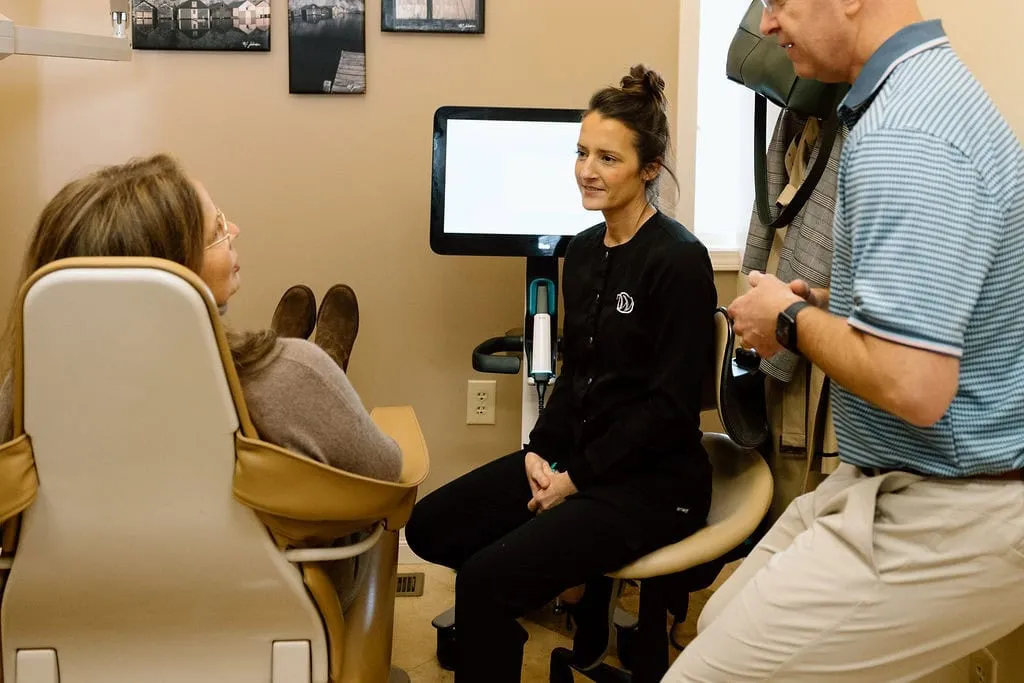
Dental crowns in Jackson, MI protect teeth that are too damaged for a filling but still worth saving, and with CEREC technology many patients can receive a custom porcelain crown in a single appointment instead of waiting weeks with a temporary.
At Watterson Dentistry, same-day dental crowns are one of the most common ways we restore broken, worn or heavily filled teeth. This guide explains when a crown is usually recommended, how the CEREC process works in our Jackson office, how it compares with a traditional two-visit crown, and a few practical things to think about as the end of the year approaches and dental benefits reset.
When Does a Tooth Need a Crown Instead of a Filling?
Damage that a filling cannot support
A filling works well when a modest amount of tooth structure is missing. When a cavity is large, a tooth has cracked, or an old filling takes up most of the tooth, there may not be enough healthy structure left to hold a filling securely. A crown covers the whole visible portion of the tooth and helps hold it together.
Other common reasons for a crown
Crowns are also used to protect a tooth after root canal treatment, strengthen teeth weakened by wear, cover a misshapen or severely discolored tooth, and support a dental bridge. Dr. Watterson will explain what he sees on your X-rays and in your mouth so you can understand why a crown is being suggested.
What Is a Dental Crown Made Of?
Natural-looking options for most teeth
Crowns can be made from porcelain, ceramic, zirconia or metal alloys. Porcelain and ceramic offer the most natural appearance and are often chosen for visible teeth, while zirconia is valued for its strength and resistance to chipping, which can make it a good fit for back teeth that handle heavy chewing forces.
Matching your smile
Whatever the material, a crown is shaped and shaded to blend with the teeth around it. The goal is a restoration that looks like it belongs in your smile and feels natural when you bite down.
How Does a CEREC Same-Day Crown Work?
Digital scanning instead of messy impressions
The process begins with a precise digital scan of the prepared tooth, so there is no tray of impression putty to hold in your mouth. That scan becomes a 3D model on the screen in front of you.
Designed and milled in our office
Using computer-aided design, the crown is designed chairside to fit your tooth and bite. Our CEREC milling unit then shapes the crown from a solid block of ceramic material while you relax, and once it is ready, it is bonded to your tooth during the same visit. You can read more about this equipment on our technology page.
Same-Day vs. Traditional Crowns: What Is the Difference?
Both approaches can produce a durable, natural-looking result. The main differences are the number of visits and whether you wear a temporary crown in between.
| Step | Traditional Crown | CEREC Same-Day Crown |
|---|---|---|
| Impressions | Physical mold of the tooth | Digital scan, no putty |
| Fabrication | Made at an outside dental lab | Designed and milled in our office |
| Temporary crown | Worn for a period between visits | Usually not needed |
| Number of visits | Typically two | Often one |
What Happens During Your Crown Appointment?
Preparing the tooth comfortably
Your tooth is numbed with local anesthesia, and any decay or weak structure is removed. The tooth is then shaped so the crown can fit over it securely without feeling bulky.
Fitting and bonding
After the crown is milled, Dr. Watterson checks the fit, the contact with neighboring teeth and the way your bite comes together. Once everything feels right, the crown is bonded in place. For patients who feel anxious about dental work, sedation dentistry is also available.
How Long Do Dental Crowns Last?
Care makes a big difference
With proper care, crowns can last 10 to 15 years or longer. Brushing twice a day, cleaning between your teeth and keeping up with regular checkups all help protect both the crown and the natural tooth underneath it.
Habits worth watching
Chewing ice, opening packages with your teeth and nighttime grinding can all put extra stress on a crown. If you grind or clench, ask whether a custom night guard could help protect your restoration.
Does Insurance Help Pay for a Crown?
Coverage when a crown is medically necessary
Most dental insurance plans cover part of the cost of a crown when it is medically necessary, though the exact amount depends on your plan. Our team helps file insurance paperwork and can answer questions about what your benefits are likely to cover.
Why timing can matter late in the year
Many dental plans run on a calendar year, which means unused benefits may not carry over once the new year begins. If a crown has been recommended and you have benefits remaining, it is worth checking your plan before the year ends. Financing options are also available through partners such as Cherry financing for patients who prefer to spread out payments.
What Can Happen If You Delay a Recommended Crown?
Cracks and decay tend to grow
A tooth with a large filling or a crack may feel fine for a while, but chewing forces can make a crack spread or allow decay to reach deeper layers. When that happens, a tooth that could have been protected with a crown may later need a root canal or even extraction.
Small steps protect your options
Addressing a weak tooth sooner usually keeps more of your natural tooth structure in place. If you are unsure whether a crown is truly needed, ask Dr. Watterson to walk you through the images so you can decide with confidence.
Why Choose Watterson Dentistry for Your Crown?
Same-day convenience close to home
Our Jackson office pairs CEREC same-day crowns with digital scanning and a team that takes time to explain each step. Dr. Watterson has practiced in Jackson since 1998, and patients appreciate being able to handle their restoration without a second visit for many crowns.
Getting started
If you have a cracked tooth, a large old filling or a tooth that has been bothering you when you chew, request a dental appointment and we will evaluate it and talk through your options.
Frequently Asked Questions
Can every crown be done in one day?
Many crowns can be completed in a single visit with CEREC, but not every situation is the same. Dr. Watterson will let you know during your exam whether a same-day crown is the right fit for your tooth.
Does getting a crown hurt?
The tooth is numbed with local anesthesia before it is prepared, so most patients feel pressure rather than pain. Some mild tenderness afterward is common and usually settles within a few days.
How should I care for a new crown?
Care for it the same way you care for your natural teeth, with brushing, flossing and regular checkups. Avoid chewing ice or very hard objects, and mention any grinding habits so we can discuss protection.
What is the difference between a crown and a veneer?
A crown covers the entire visible portion of a tooth and is used mainly to restore strength. A veneer is a thin shell bonded to the front of a tooth and is used mainly to improve its appearance.